

Nobody I know has honed a style as well as James White, otherwise known as Signalnoise. James has been creating 80s-style art since 2008, and he still loves what he does as much as he did then. I've always admired James' work. For me, it captures the energy and sincerity I felt creating as a kid. And based on our conversation, it's clear James still feels that way when he draws.
Here James and I talk about the struggle of personal style, how the creative community has changed over the last decade and the infamous debate between being a jack-of-all-trades or a master.
I’ve been following your work for at least a decade by now, and as far as I know you’ve been designing since the late 90s. Let’s start with a very simple question: WHY? Why do you still do what you do? Curious to hear what gets you up in the morning.
I never lost that sense of wonder that comes from creating something out of nothing. Imagination and curiosity. I’ve been drawing since the age of four, and spent countless hours of my childhood drawing my favorite comic book characters and cartoons, as well as creating my own characters. When I got into the design industry in 1998 (designing websites), I kept my creative path intact by working on my own projects during evenings and weekends. So, to answer your question directly, I still do what I do because I love it. My creative path hasn’t changed since I was four; I might have traded in my colored pencils for Photoshop, but the drive remains the same. I’ll never stop.
Your work has a very strong style, and as far as I remember I’ve never seen anything else from Signalnoise. Is this all part of a grand plan or do you think this is all just happening naturally for you?
Getting to where I am now, stylistically, has been a long road. As I said, I come from a childhood of drawing and got into the industry through web design. But there’s a 10-year period (1998 - 2008) where I was creating all manner of analog and digital art. I was machine-gunning content in a myriad of styles that hardly anyone will ever see. All that work, for better or worse, played a part in where I was at that point. I was experimenting, learning my tools, exploring and trying to find my place in the creative field. I knew I had more to say than just being a web designer, but that goal was out in the fog for a decade. It was undefined, so I just kept doing what I do: I made stuff. Comics, Flash animation, digital collage, posters, paintings, even sculpting at one point.
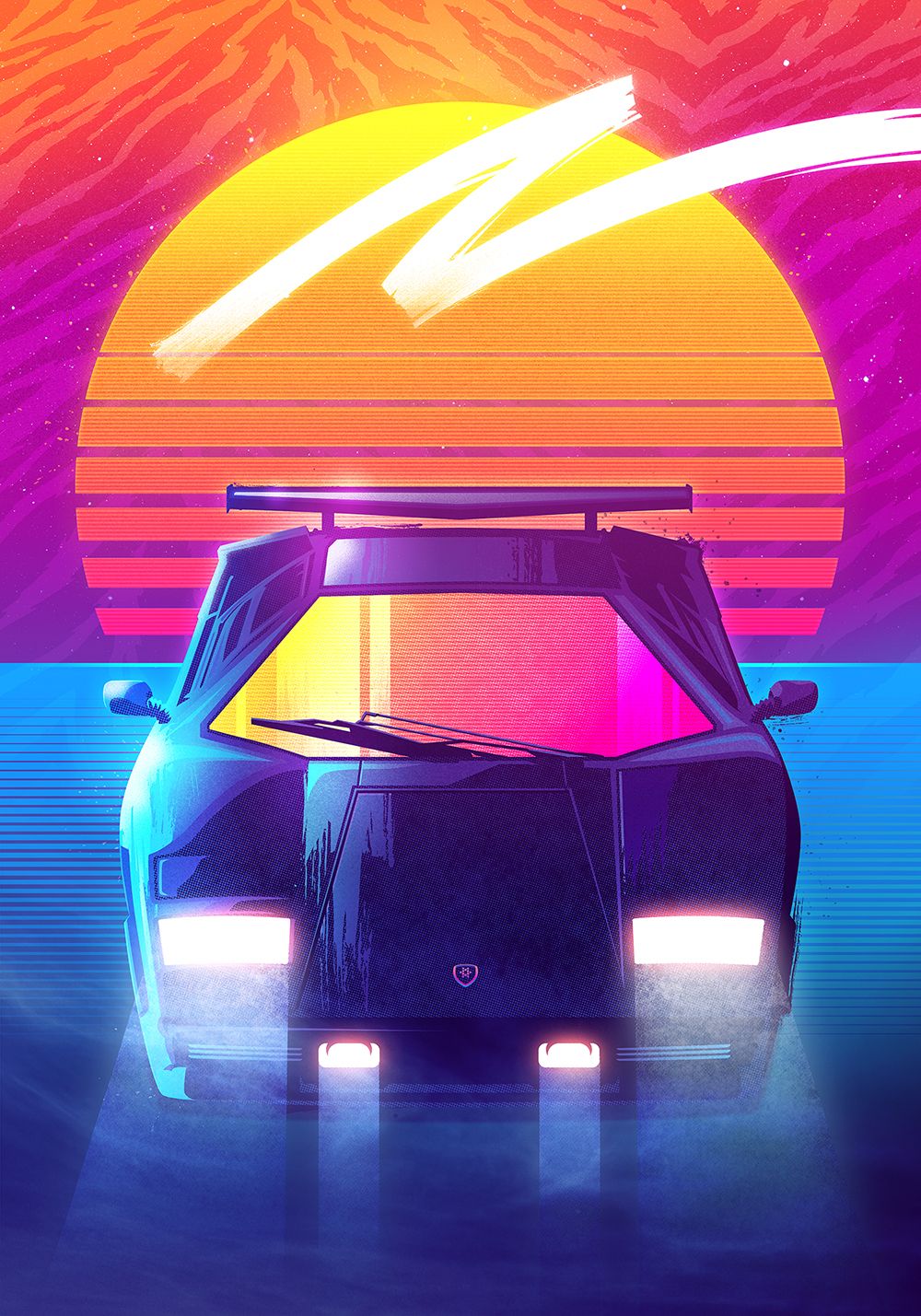
Arriving at the 80s style I’m known for took that amount of time to discover. In 2008, it happened very much through my late-night experimenting in Photoshop. I started playing with rainbows and lens flares which reminded me of television network IDs from when I was a kid. I started researching what, say, the NBC peacock looked like in 1984 and drew inspiration from that. Eventually, with the help of Flickr, I became known as the “80s guy,” a style that wasn’t being explored at the time and was deemed “cheesy” by many. But I was having lots of fun re-visiting styles from my childhood, so I kept doing it.
So what started very organically through experimenting became the face of my studio. It allowed me to go freelance and create art for big brands all over the world. But to say I had some grand plan in mind would be a complete lie. To this day, I’m just doing what I want to do and I’m very fortunate that it also pays the bills.
"I’ve always believed in the philosophy of never putting yourself ahead of your art. What you create should always be number one."
In talking with artist friends, it seems like some have angst around their personal style. While they are successful at what they do, they sometimes felt a bit pigeonholed. It’s like the style they crafted over the years became their own little prison they have difficulty escaping from. What are your thoughts on this feeling? Do you feel lucky to have found your personal style, or do you sometimes wish to break out?
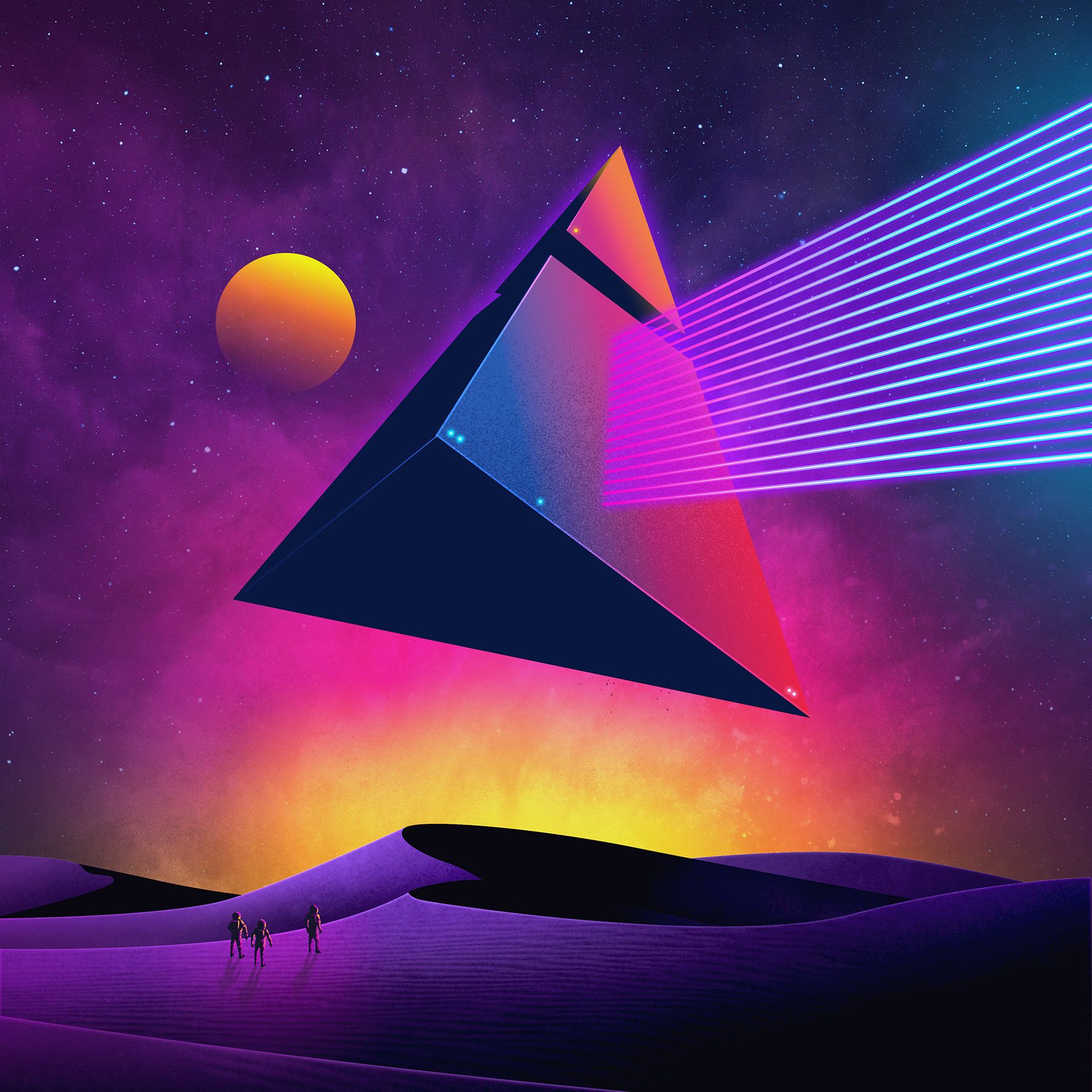
I have my ups and downs, honestly. When I’m in the thick of creating some crazy 80s-inspired nonsense and having lots of fun doing it, I can’t think of ever working in any other style. It captures everything I want to capture: fun, enthusiasm, silliness and a bit of awesome. But I can’t lie, the thought creeps into my head every so often that maybe I have an expiration date. I’ve watched the 80s aesthetic rise with each passing year, eventually seeing it used in the likes of Marvel movies, car ads and popstar music videos. When something becomes a fad, it eventually goes away. It’s something you really have no control over. If Brittney Spears decides to make a video that looks like art I created four years ago… suddenly my art looks like Brittney’s shit, not the other way around. It’s unsettling. So in that way, yeah it could feel a bit like a prison.
But, despite the stereotypes, the aesthetic I work in isn’t just one thing. Over the years I’ve found there are plenty of stylistic areas to explore within the 80s retro style. The art I create now is different than the work I created in 2012, despite coming from the same source of inspiration. I get comfort in the idea that there’s still terrain to explore in doing what I do. I just have to stay on my toes and keep pushing myself.
I know you’ve been working in the design industry for a long time. You’ve also become a household name at design conferences around the world. What has significantly changed for the design community in the last 10-15 years, that you’ve noticed? And do you still feel the “community” is there like it used to be, or have things evolved for better or for worse?
Man, great question. Things have definitely changed a few times during my tenor in the industry, most notably is size. When I was learning graphic design and tech back in 1995 - 1998, the tools you needed to create digital art weren’t accessible to everyone – certainly not young people. Computers were expensive, as was the software. As a result, the online creative community was a lot smaller and you really had to know what sites to visit to even know what was going on. I’m talking, late 90s and early 2000s, the time of web portals and bulletin board systems.
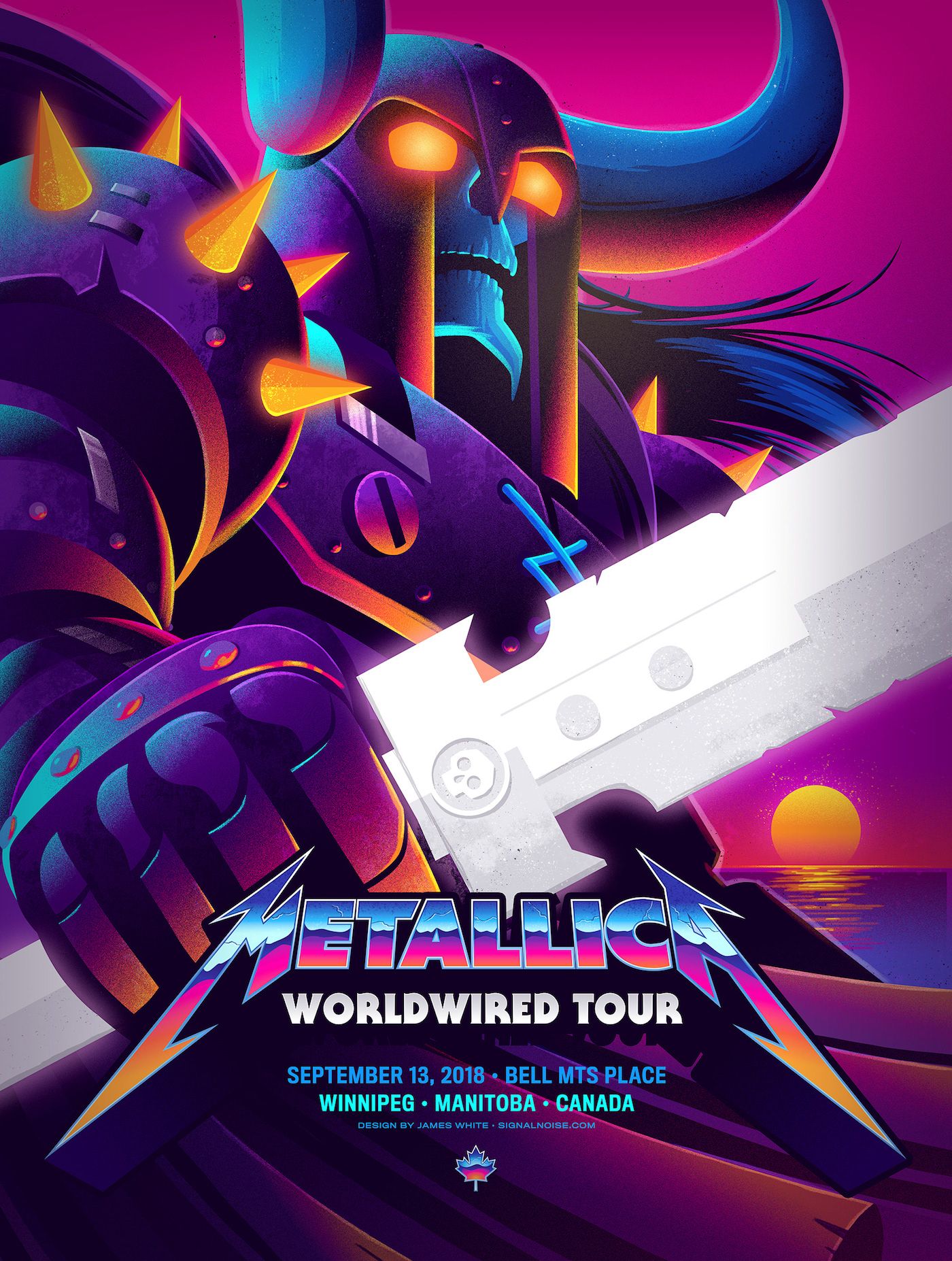
When blogging became a thing, people could suddenly have their work featured in places that got a lot of traffic. Blogs became news sources for what creative people were doing. This was a huge time for me and my studio. My work was picked up by sites like Abduzeedo.com and Smashing Magazine, exposing my art to people all over the world and ultimately paving the way for me to go freelance.
And now we’re in the social media era. Technology is accessible to people of all ages, resulting in our creative community exponentially growing.
Now, for better or worse? That’s a tough one. On one hand, we have a much larger audience than we had in the past, and some people can make a living through the design community alone without the need of clients. So much new work is posted every day that it’s impossible to keep up, spawning new genres and tribes almost overnight. This is all great and inspiring.
But on the other hand, it’s becoming harder and harder to cut through the noise. Algorithms create a situation where we may not even see the work of your favorite artist despite you following them. When everyone’s shouting, how can anyone be heard? As I said, it’s a tough one.

I totally agree. Becoming a “design” or “artist” celebrity can happen within just days now, sometimes even hours. Platforms such as Instagram, TikTok etc. have given us the tools to become a viral sensation within a short period of time.
Do you believe this new way of “going viral” can be distracting for young artists when it happens too fast and early, or do you believe it is the best thing that can happen to a young artist?
I’ve always believed in the philosophy of never putting yourself ahead of your art. What you create should always be number one. In light of that, no, I don’t think the pursuit of going viral is a good thing.
As creative people, we should be worrying about the thing we want to create, the thing we want to say or the project we want to execute. If we do that job effectively, with a little luck, our creation will be widely shared and we might see some benefits come from that (getting commissions, for example). The PURSUIT is the creation. The RESULT is the exposure.
If the goal of an artist is to “go viral” or “become famous," they labor under ego using their work as a vehicle. We can use stuff like Instagram or TikTok to show what we’ve created, but the love should always be for the art, not the likes. So yes, I do think the idea of going viral is distracting for artists and skews what the ultimate goal of creating art should be.
But hey, I’m old school.
I’ve always operated under the mantra “do work so good they can’t ignore you,” which seems similar to your philosophy here. Yet I’ve seen artists who are incredibly good at self-promotion even though their work isn’t that great, and I’ve also seen artists who are brilliant at what they do, and their art isn’t seeing the light of day.
Assuming we’re putting our work first like you said, how does one balance creation vs. self-promotion? What’s the best use of our time, given all the possibilities out there?
It’s a tricky balance, isn’t it. I’m sure marketing types won’t agree with me, but there isn’t a perfect recipe for self-promotion that works for everyone.
I’ve always operated under the rule of being myself, and the most successful people I know do the same. When I’m catching up on posts from the people I follow, the best form of promotion I see is from those who are authentic. Creating work that comes from your heart AND being able to talk about it with your own voice isn’t easy for some, but even the effort shines through.
Taking me as an example, I try to keep my art and posts as on-brand as I can… and by “on-brand,” I mean pertaining to my nerdy interests. When I’m not creating art, I’m reading comics, playing old video games, goofing with my toys or watching old action movies. All that stuff works its way into the language and content I post about. My audience knows my work, but they also know me. That’s the balance I’ve managed to sort out for Signalnoise, and I think everyone needs to sort that out for themselves.
"In the digital realm, there’s a load of elements that can change, update, break-down… but drawing is always the same. It will forever be my escape."
You’ve consistently maintained the slightly raw feeling of hand-drawn work throughout the years. When digital tools today allow you to make your work so polished and detailed, even photorealistic, why have you chosen to keep your illustrations more flat and raw?
Drawing will always be my first love. I’ve picked up new tools and techniques over the years to digitally improve my drawings, but nothing is as fun and simple as flipping open my sketchbook and getting pencil to paper. It’s lo-fi, something I can do anywhere without the need of a wifi connection or a charge cable.
Even though I’m not known for my drawing, almost everything I do starts in the sketchbook. That’s my playground where I can rough up concepts and color quickly to see what direction I want to pursue before getting into Illustrator or Photoshop. It saves time but also results in a better product.
I think the reason I prefer to keep my drawings raw is that my process hasn’t really changed since I was a kid. I throw down pencils, get the inks lines on, then fill in my blacks. It’s the same way I drew when I was 12, and there’s a real comfort in that. In the digital realm, there’s a load of elements that can change, update, break-down… but drawing is always the same. It will forever be my escape.
You’ve worked independently for a while now. Is there any other artist you’ve dreamed of collaborating with? Who and what would the project be?
Heading back to my roots, I think Dave McKean would be my choice. His influence was very strong in my early work (1998 - 2005) and a big reason why I dove into Photoshop to the extent I did. I’d reverse engineer his works as best I could to figure out how he achieved the results he did, all the while learning the ins and outs of digital software. It could be said that I learned more about creating art from McKean than I did from any school.
I wasn’t drawn to McKean’s work because of the digital side, but because he was a mixed media artist in the truest sense. He painted, sculpted, built structures, even set things on fire to get the result he wanted. Pouring over his work in the late 1990s taught me that art (analog or digital) didn’t have to be just one thing.
Even though his influence can’t really be seen in the work I do now, I owe McKean a great debt. He was the right artist for me to be a fan of at the right time in my career. SO, what would our collaboration be? I really have no idea, but you can be damn sure I’d learn a lot from it.
Today, a jack-of-all-trades has become desirable to companies. But I know you prefer honing in on whatever you’re good at and mastering it. Let’s end the debate now: What has more lasting power today, the jack-of-all-trades or the expert?
Haha, not sure my two cents will end any debates, but I’ll give it a shot.
We have to think about who benefits from each path. Being a jack-of-all-trades is in the best interest of agencies (in most cases). Having an employee who can do a bunch of stuff gives them access to a wider group of clients. They make more money, they pay the designer, blah blah.
Mastering something you enjoy benefits the artist/designer. Embarking on a quest to figure out what kind of work you want to do, what brings you the most enjoyment, and excelling at that raises the odds of being known for a distinct creative voice. The biggest plus being that it’s something the artist loves to do.
So, there’s no right or wrong path. It depends on the artist and what they want to accomplish with the time they have. I’ve always advised younger designers to make stuff, a lot of it. Through the process of creation we discover what we enjoy, what we dislike and inevitably learn new skills along the way.
I didn’t know what I wanted to do with my career back in 2003, but my path became clearer the longer I spent in the sketchbook and on the computer, creating my own work outside of the day job.
Time. It takes time to sort out who we are and what we want to create. There’s no way around it.