

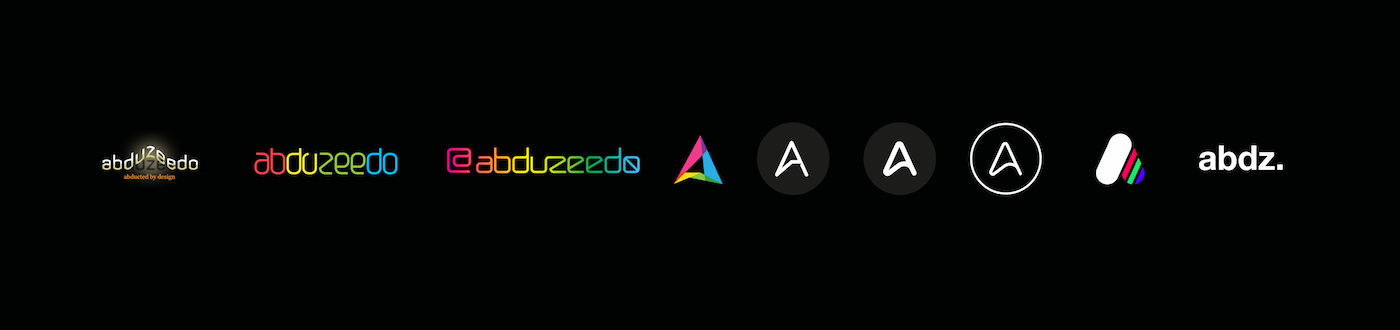
A lot has changed with design and technology since 2006, when Fábio Sasso first started Abduzeedo as a personal design blog. Many publications have started and folded in that time, yet Abzueedo has remained a constant presence in the design community and continued to evolve (check out the latest redesign at abdz.do). I'd struggle to find someone more immersed in our field, who champions designers as faithfully and earnestly as Fabio.
As someone running an independent design blog myself, I have particular admiration for Fábio's dedication to this "side project." After years of reading Abdueezo and contributing to it myself a few times, I wanted to talk to Fabio about what motivates him and how he's seen the design community change over the years. Here we talk about "inspiration burnout," the identity crisis of social media and why he plans to continue publishing, whether people read or not.
Hey, Fábio! First, congrats on the fresh redesign and official move from Abduzeedo to ABDZ. I’ve noticed the brand and website design has consistently evolved since you started it. How many redesigns do you think you’ve done over the years?
First off, thanks so much for inviting me. I am a fan of the contributions you’ve been delivering to the design community.
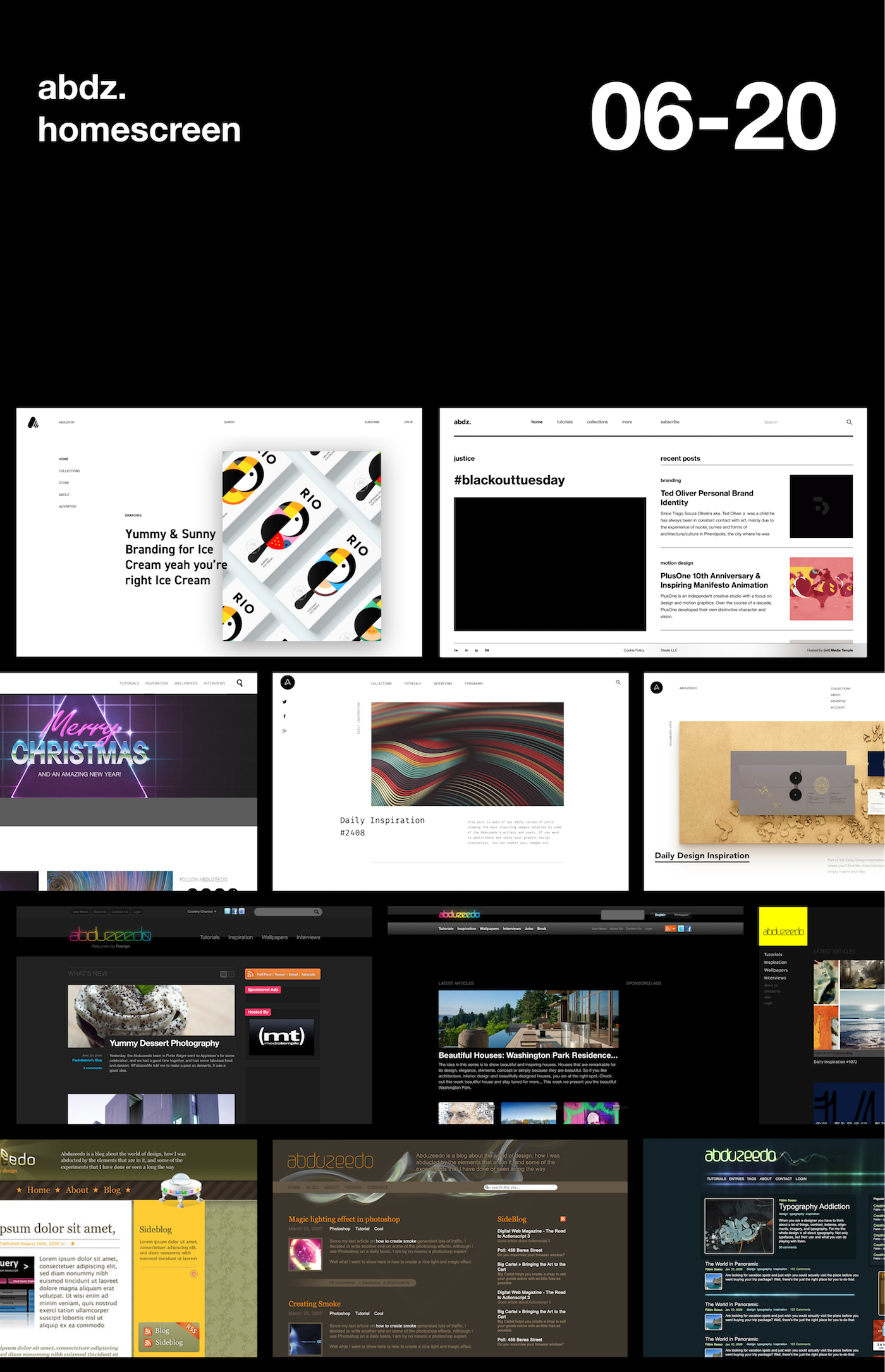
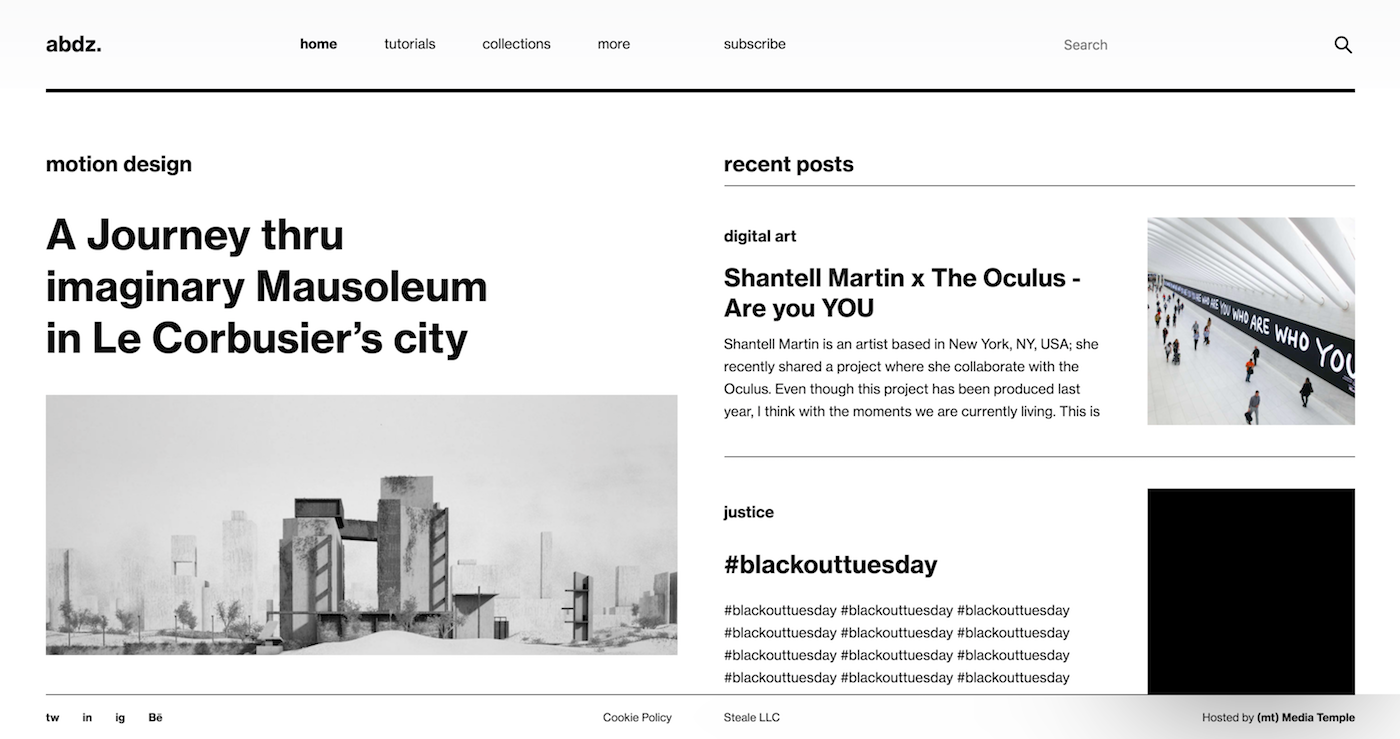
Now about the Abduzeedo evolution throughout the years, I’ve been trying to redesign it every 18 months pretty much. It’s hard with all the day-to-day responsibilities of a full-time job plus a 4-year-old guy to take care of. I also do pretty much everything myself when it comes to the redesign. I design and code. I have the help of a good friend that is a software engineer to deploy it when it’s ready… So I can say that in 14 years of ABDZ, we had probably around 8-10 designs.
I know you started ABDZ because your studio was robbed, and you decided to blog as a way to back up your files. How have your goals and your work with ABDZ changed since then? How many people contribute to it now?
The goals have changed as the blog got older. I personally never thought the blog would take off as it did, especially in the 2007-2011 time. Not that it was huge, but imagine an unknown guy from Brazil with 10 daily visitors suddenly going to 200k daily. That growth, especially when you are not prepared, is complicated. You really don’t know how much of it is just because you were at the right place at the right time (luck) or if it was because of the content. Of course, we tend to think it’s the latter, but more and more I believe it is the former.
In the past I thought it was the content, so we started to heavily focus on articles that would result in more reach/traffic, even if that meant something that wasn’t exactly what I was excited about. In other words, it had become a job, not a passion. A by-product of that is that you end up losing the motivation to keep doing it. The only way to change that is to shake things up, find the real reasons and forget about the numbers. That’s what I tried to do.
Today the blog is literally a place for me to publicly catalog things that I think are cool and inspiring. That’s the goal of Francois Hoang, the other contributor on the site as well.
"Every time you add value to an exchange of information, you automatically add a huge amount of responsibilities."
ABDZ is only one of many things you do. What are you doing when you’re not running ABDZ?
I have a full-time job at Google leading and managing the UX team responsible for Android Automotive OS. That takes most of my time. I tend to blog every day very early in the morning before work. I’ve always been an early bird and my son, thankfully, didn’t get that from me. He sleeps like a rockstar until close to 8 a.m. That gives me two hours of focus to work on the blog and other things.
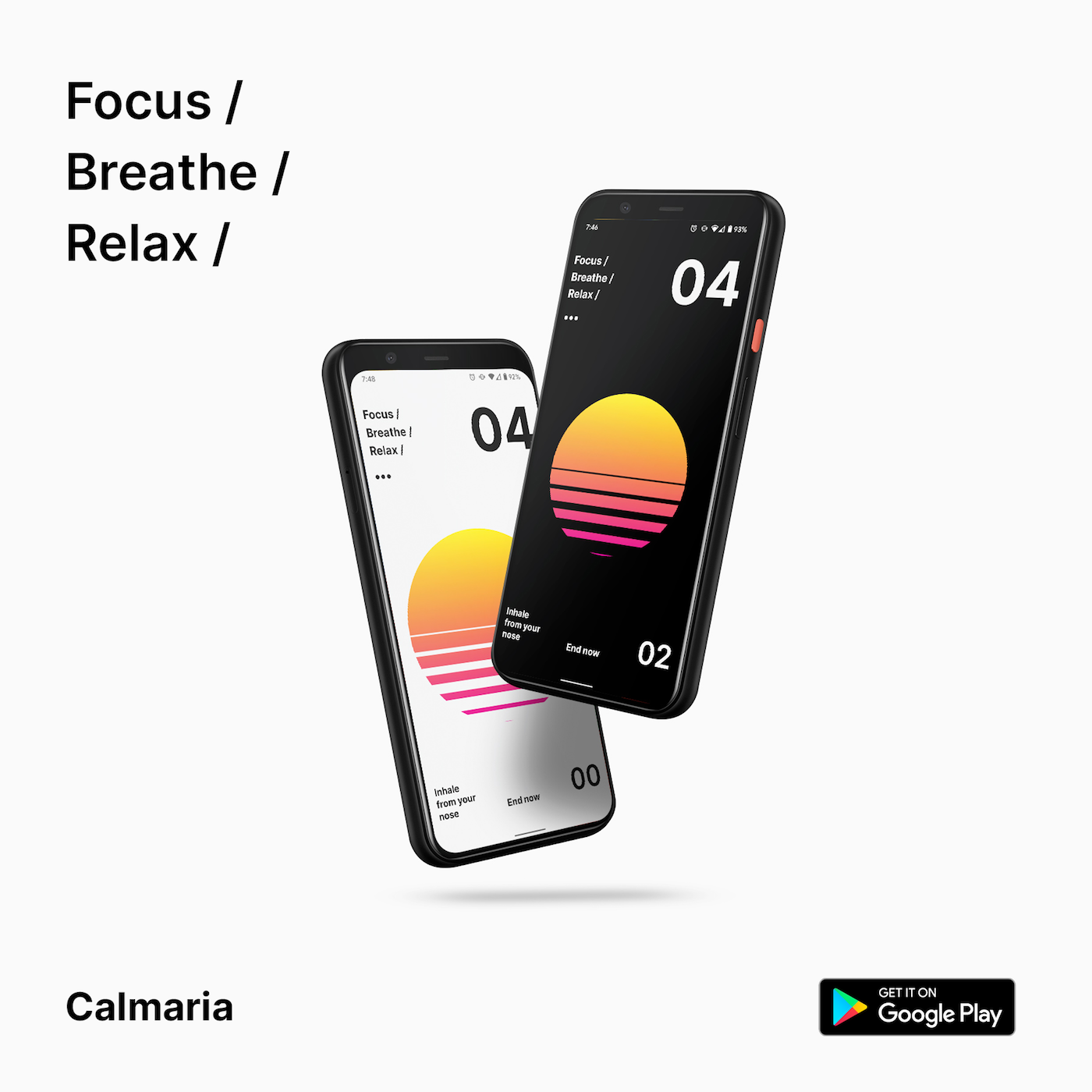
A couple of weeks ago I created a little Android app for me to help me relax. I got into some breathing exercises for that and I was using the iPhone as my primary device (I constantly switch) and everything was fine. There are good apps for that platform. Then I switched back to Android and I was shocked by the lack of simple and beautiful apps there. I saw that as an opportunity for me to create my own app. I always wanted to code my own native application. As I joke at work, my dream was to be a software engineer, but my skills and logic would only create nightmares. Now I am working on the iOS version.
In my personal life side of things, my son is in the “why” phase, so my wife and I spend a considerable amount of time getting deeper in the “why” back and forth game with him.
I’ve noticed ABDZ has maintained its first-person, casual voice, as if it’s still a blog, despite having several writers now. Has that been an intentional choice, or does it just feel natural to you?
That was always the intention. I still call it a blog. I still treat it as a side-project and have told anyone that wanted to contribute to and think that way. I always imagined it as a medium for me and others to talk or share things as if we were doing that with a friend of ours. No formalities. Just conversation. That also makes mistakes more forgivable. Not that quality doesn’t matter, on the contrary, but remember, 100% of the blog contributors throughout the years didn't speak English as their first language. In my case, I didn’t even know English when I started it 🙂
"I feel that Instagram and Twitter became too focused on the person rather than the content shared. Now it’s just a polarized place for people to help fuel their confirmation-bias."
You don’t do partnerships, as far as I’m aware, and have only one global space for paid ads on your site. How have you sustained ABDZ over the years? Has it been more like a labor of love for the design community, or have you been able to make it profitable?
That’s correct, we don’t do partnerships. We very rarely do sponsored content. The reason is just to keep things purely independent of any interest. I never charged for content for the same reason. Every time you add value to an exchange of information, you automatically add a huge amount of responsibilities. It goes back to the goal of being a side-project, personal. If the intent changes and I turn it into my main gig, I would definitely try to partner or scale.
So you're not directly making money from it, and you're not too concerned with reach or numbers. Even if you were, search engines and algorithms have made it even harder and harder to get your work seen, and people would rather scan than read these days.
What has motivated you to continue doing this for the last 14 years? What makes it rewarding?
It’s funny, I remember back in the early 2000s reading about the long-tail and how the web+social would fundamentally change things. User-generated content gave us access to an immeasurable amount of information and easy access to heroes who once would just be known by the books they wrote.
With Web 2.0 and all the services, we all could start sharing our content. That was in theory; things weren’t that simple. So very few were doing it. Abduzeedo was one of the biggest design blogs not because it was the best, but it was because it was one of the few constantly adding content.
Fast Forward to now. Everyone carries a computer in their pocket at least 10x more powerful than the laptop I used to start Abduzeedo. Sharing things is easier than mailing a letter or making a phone call. The long-tail fulfilled its prophecy, but with that there was a huge monetary impact. There’s just much more supply than demand and with that, prices go down. There’s also a shift to other things. First photography, now video. The evolution train never stops.
For me, I tried to tag along. I like to try things, so maybe I will get lucky again, maybe not. The goal is more about learning rather than making money.
"It was very hard to find anything. It was just books or expensive magazines. That is not a problem anymore. However, the insecurities are the same."
Online, your social presence was synonymous with ABDZ’s. Anything that comes from ABDZ comes from you and vice versa. I know with my own blog, I both enjoy and dislike this. I don’t always want my identity tied up with my brand or product, yet it just naturally happens for me because my work IS part of my identity. How do you feel about this? And have you made efforts lately to separate the two?
I’ve been slowly transitioning on some platforms. I feel that Instagram and Twitter became too focused on the person rather than the content shared. I will sound old, but there was a different vibe there. Different opinions were respected, if not celebrated. It was a way for you to learn new things. Now it’s just a polarized place for people to help fuel their confirmation-bias. Surprisingly, LinkedIn now reminds me of Twitter 10 years ago. So if you look at my Twitter and Instagram, they are clearly separated. On LinkedIn, I still try to link my name to the blog. It’s my baby and as a good parent, we are always proud of our babies 🙂
You’ve been extremely in-tune with the design community since at least 2006. How have you seen the community change over the years? How do conversations and culture and talent look now compared to when you first started out in design?
My first design job was in 1998. You will probably have the biggest drop off in reading here. It’s been a long time and there's been a lot of change because of the access to information and tools. Everyone has an amazing camera on their phones, you can have all Adobe products available literally by paying just 50 bucks.
Rewind 20 years. In Brazil, it was impossible to get anything. Most people used older versions of the tools or trials if not pirated copies. I used Corel Draw because it was cheaper than Illustrator, so the companies I worked for decided that it was the right tool. Same for inspiration. It was very hard to find anything. It was just books or expensive magazines. That is not a problem anymore. However, the insecurities are the same. The first job. Am I doing the right thing? Confidence. Those things don’t change because of tools or access to information. So in that sense, I feel that the community hasn’t changed much. I still hear the debate about whether designers should learn how to code.
I cannot forget to mention just the pure quality of work. Of course, it has exponentially increased. With so much to see and compare, of course the bars are higher. The references are better and the high quality work is a by-product of that.
But we should never compare because it’s not fair. What we lacked in the past gave us the drive and the constraints to overcome that people don’t have today. It’s like comparing Lebron James with Michael Jordan, I think.
"Projects like that, where designers take the challenge and push themselves, is one of the reasons I keep also blogging and cataloging, even if I am the only one consuming."
I’m of the belief that we as creatives can sometimes use inspiration as procrastination. Do you think there’s a “dangerous” side to inspiration, despite how necessary it is?
I feel that there is this tendency to end up doing the same thing because it’s either trendy or because we can confirm by references that it’s good. At least that’s what I feel and experience. If you go to sites like Dribbble (which I really like) you will see that a lot of the work feels very alike. It's not a bad thing, but just a way to illustrate that we use the same “inspiration” or references even if that is not the most appropriate for the specific project or client.
Your Twitter bio currently reads “Have you given up on being inspired?” With so much visual stimulation online now, so many tools allowing anyone to create, so many products pushing “inspiration” for the sake of selling something, do you think we’ve become jaded or numb to inspiration?
Ha! Good catch. I just changed that. I was experimenting with some tag lines. This one, in particular, I liked because I got some tweets mentioning that they haven’t visited the site in a long time. The goal was to instigate. I wanted to highlight that people might have missed a lot of good and curated content.
Personally, I think things go in circles. We went from having little access to good content to suddenly an explosion of options (like browsing Netflix but not watching anything). To navigate that ocean of references, people will rely on curation. I am still skeptical about algorithmic curation because it will end up showing me exactly the same thing over and over. I think the idea of showing something unexpected and new is key to our evolution as designers. Otherwise, the future will be very polarized.
How much strategy is behind your content on ABDZ? Are you creating a publishing schedule each month, or are you just writing about what you discover and what inspires you in the moment? Do most ideas and articles come to YOU at this point, or are you still brainstorming and planning them out?
Close to 0. We used to have a very detailed series of articles, with the day of the week and time for them to be posted. It worked well for a while. But with time, things will always get stale. Now we are in a totally casual mode. Perhaps in a few years, we will change that again.
You’ve been curating and sharing design inspiration for years now. What are some of the most beautiful, inspiring images or works you’ve witnessed that have stuck with you?
Oh, there were so many incredible designers and projects we featured. I still remember in the beginning when we featured James White. I love his style to this day.
Amongst the many articles and topics, one that always impressed me for its longevity and freshness of content has been the 36 Days of Type – I think they’ve been doing that for more than five years and it’s always amazing to see what people can do with the alphabet letters. Projects like that, where designers take the challenge and push themselves, is one of the reasons I keep also blogging and cataloging, even if I am the only one consuming.
__
Follow @abduzeedo on Twitter to keep up with what's happening in the creative community, and be sure to check out Fábio's portfolio to see his personal projects as well.